How I Built a Smarter Education Fund Portfolio—And What Actually Worked
Saving for a child’s education used to feel like running uphill—expensive, slow, and full of surprises. I started with a savings account, but inflation kept eating returns. That’s when I shifted to building a real investment portfolio. It wasn’t easy at first—missteps, market swings, doubts. But over time, a clear strategy emerged. This is my journey: how I balanced growth and safety, avoided common traps, and created something sustainable. No hype—just honest lessons that could help you do it better.
The Moment Everything Changed: Why a Savings Account Wasn’t Enough
For years, I believed the safest place for my child’s education fund was a traditional savings account. It felt secure—money in the bank, no risk of loss, FDIC-insured, and easily accessible. I watched the balance grow slowly, congratulating myself on being responsible. But after reviewing my account statement one year, something didn’t sit right. The interest earned was just over 0.5%, while the U.S. inflation rate had climbed to nearly 3%. That meant my money was actually losing value in real terms. Every dollar saved was worth less the following year. That realization hit hard. I wasn’t protecting my child’s future—I was slowly eroding it.
This was the turning point. I began to understand that safety isn’t just about avoiding losses in dollar terms; it’s about preserving purchasing power. A dollar today buys more than a dollar ten years from now, especially with college tuition rising faster than general inflation. According to data from the College Board, average tuition at public four-year institutions has increased by about 3% per year beyond inflation over the past two decades. If my savings weren’t earning at least that much, I was falling behind. The so-called “safe” choice was, in fact, a hidden risk. Staying too conservative could mean failing to meet the goal altogether.
That’s when I committed to building a real investment strategy. I didn’t abandon caution—I redefined it. True safety, I learned, means using time and smart allocation to grow money reliably while managing volatility. Instead of fearing market fluctuations, I began to see them as part of the process. The shift wasn’t about chasing high returns or gambling on stocks; it was about creating a disciplined, long-term plan that respected both growth and protection. I started small—allocating just 20% of the fund to low-cost index funds—while keeping the rest in high-yield savings and short-term CDs. Over time, as I gained confidence, I adjusted the balance. The goal wasn’t to eliminate risk, but to manage it wisely.
Looking back, the biggest mistake wasn’t taking on investment risk—it was assuming that doing nothing was risk-free. Inaction can be the costliest choice of all. By staying in a low-return account, I was guaranteeing a shortfall. The lesson was clear: when saving for a long-term goal like education, growth isn’t optional—it’s essential. And growth doesn’t come from hiding money in a savings account. It comes from thoughtful, patient investing that aligns with the timeline and the reality of rising costs.
Mapping the Timeline: Aligning Investments with Education Goals
One of the most powerful insights I gained was that time is the most valuable asset in investing—especially for education savings. Unlike retirement, where you can sometimes delay retirement by a few years if markets are down, college has a fixed start date. You can’t tell a university, “I’ll pay next year instead.” That inflexibility means your investment strategy must be structured around the countdown to that date. I began to divide my savings journey into three distinct phases: long-term (more than 10 years away), mid-term (5 to 10 years), and short-term (under 5 years). Each phase called for a different approach to risk and return.
In the long-term phase, when my child was still young, I focused heavily on growth. I allocated about 80% of the portfolio to broad-market index funds, particularly those tracking the S&P 500 and total stock market indices. These have historically delivered average annual returns of around 7% to 10% over decades. While there are short-term swings, the odds of positive returns over 10+ years are strong. I accepted that some years would be down, but I trusted the long arc of the market. During this period, I also added a small portion—about 10%—to international equity funds to diversify geographically. The remaining 10% was in bonds and cash, mainly as a buffer and for contribution flexibility.
As we entered the mid-term phase, around age 8 to 10, I began to gradually reduce exposure to stocks. This is known as a “glide path” strategy, similar to what’s used in 529 college savings plans. I started shifting 5% of the portfolio from equities to high-quality intermediate-term bond funds each year. This didn’t mean abandoning growth—stocks still made up about 60% of the portfolio—but it reduced the risk of a major market drop right before tuition payments began. I also started paying closer attention to expense ratios and tax efficiency, ensuring that fees weren’t eating into returns. During this time, I increased contributions slightly, taking advantage of compounding while still having time to recover from downturns.
When we reached the short-term phase—less than five years from college—I prioritized capital preservation. I rebalanced the portfolio to 40% stocks, 50% bonds, and 10% in cash or cash equivalents like money market funds. The goal was no longer aggressive growth but stability and liquidity. I avoided volatile sectors and speculative investments entirely. I also began setting aside the first year’s tuition in a high-yield savings account, ensuring it was fully protected and accessible. This phased approach allowed me to capture market gains when time was on my side, while protecting the principal when time ran short. It wasn’t about timing the market—it was about aligning the portfolio with the reality of the timeline.
The Core Building Blocks: What My Portfolio Actually Holds
My education fund portfolio isn’t built on exotic investments or trendy strategies. It’s rooted in simplicity, diversification, and low costs. I’ve learned that the most effective portfolios are often the least exciting. Over time, I’ve settled on a mix of asset classes that balance growth potential with stability. Each component serves a clear purpose, and I avoid anything I don’t fully understand. The foundation of the portfolio is broad-market index funds. I use a total U.S. stock market fund and a total international stock fund, each with expense ratios below 0.10%. These provide instant diversification across thousands of companies, reducing the risk of any single stock failing.
Dividend-paying stocks make up a smaller but meaningful portion of the equity allocation. I focus on companies with a history of consistent dividend growth, such as utilities, consumer staples, and healthcare firms. These stocks tend to be less volatile than growth stocks and provide a steady stream of income that I reinvest. While dividends aren’t the main driver of returns, they add a layer of resilience, especially during market downturns when prices may fall but payouts continue. I don’t chase high yields—some are warning signs of underlying problems—but I value companies that reward shareholders reliably over time.
Bonds are a critical part of the portfolio, especially as the college date approaches. I use a mix of U.S. Treasury bonds, investment-grade corporate bonds, and municipal bonds. Treasury bonds offer safety and are backed by the full faith of the U.S. government. Corporate bonds provide slightly higher yields, while municipal bonds offer tax advantages if held in taxable accounts. I avoid high-yield or “junk” bonds because their volatility contradicts the goal of stability. My bond funds have average durations that match my time horizon, helping to minimize interest rate risk. When rates rise, bond prices fall, but I hold them to maturity or use funds with stable net asset values.
Real estate investment trusts (REITs) add another layer of diversification. I allocate about 5% of the portfolio to a broad REIT index fund, which invests in commercial, residential, and industrial properties. Real estate tends to perform differently than stocks and bonds, providing a hedge against inflation. While REITs can be sensitive to interest rate changes, their long-term returns have been solid, and they pay dividends that enhance total return. I treat this as a satellite holding—useful, but not central. Finally, I maintain a cash reserve in high-yield savings accounts and short-term CDs. This ensures I always have funds available for near-term expenses without selling investments at a loss. Every piece fits a role, and nothing is there for speculation.
Risk Control: How I Sleep Well at Night
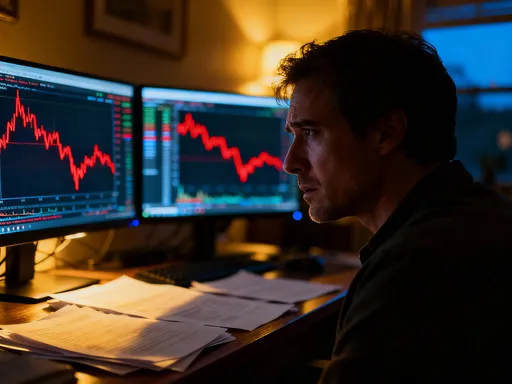
One of the most common fears about investing for education is the possibility of losing money just when it’s needed most. I shared that fear. In 2020, when markets dropped sharply in March, I watched my portfolio decline by nearly 20% in a matter of weeks. It was unsettling. But I didn’t panic. I had a plan, and I stuck to it. That experience taught me that risk control isn’t about avoiding downturns—it’s about designing a portfolio that can withstand them. The key tools I use are diversification, rebalancing, dollar-cost averaging, and emotional discipline.
Diversification is the first line of defense. By spreading investments across different asset classes—U.S. stocks, international stocks, bonds, real estate, and cash—I reduce the impact of any single market’s performance. When one area struggles, another may hold steady or even gain. For example, during stock market declines, high-quality bonds often rise in value or at least hold their ground, helping to stabilize the overall portfolio. I also diversify within asset classes—using index funds rather than picking individual stocks—so I’m not betting on any one company’s success.
Rebalancing is equally important. Over time, some investments grow faster than others, shifting the original asset allocation. If stocks perform well, they may grow from 70% of the portfolio to 80%, increasing risk. Once a year, I review the portfolio and sell a portion of the overperforming assets to buy more of the underperforming ones. This forces me to “buy low and sell high” systematically, rather than emotionally. It’s not exciting, but it keeps the risk level consistent with my goals.
Dollar-cost averaging has been one of my most effective tools. Instead of investing a lump sum, I contribute a fixed amount every month, regardless of market conditions. This means I buy more shares when prices are low and fewer when they’re high, lowering the average cost over time. It removes the pressure to time the market and reduces the risk of investing a large sum just before a downturn. I automate these contributions, so they happen without me having to think about it. This discipline has smoothed out volatility and helped me stay invested through ups and downs.
Finally, emotional discipline is perhaps the hardest but most crucial part. It’s easy to react to headlines, fear losses, or chase gains. I’ve learned to focus on the long-term plan, not daily fluctuations. I don’t check the portfolio daily. I review it quarterly or annually, and only make changes based on strategy, not emotion. I remind myself that market drops are temporary, but abandoning the plan can have permanent consequences. With these safeguards in place, I can sleep well, knowing that short-term noise won’t derail a long-term goal.
Hidden Traps: Mistakes I Made So You Don’t Have To
No financial journey is perfect, and mine was no exception. Early on, I made several costly mistakes—ones that could have been avoided with more knowledge and patience. The most painful was chasing a high-return sector fund that promised double-digit gains. It was heavily marketed as a “smart choice for education savings,” and I jumped in without fully understanding the risks. Within a year, the sector faced regulatory changes, and the fund lost nearly 40% of its value. I held on, hoping for a recovery, but it took years to break even. That experience taught me a vital lesson: if something sounds too good to be true, it probably is. High returns often come with high risk, and for education savings, risk must be managed, not maximized.
Another mistake was overcomplicating the portfolio. At one point, I had more than a dozen different funds and accounts—some taxable, some tax-advantaged, each with different fees and rules. I thought more choices meant better control, but it only created confusion. Tracking performance became a chore, and I couldn’t clearly see how everything fit together. I also paid higher-than-necessary fees because I wasn’t scrutinizing expense ratios. The solution was simplification. I consolidated accounts, reduced the number of funds to six core holdings, and focused on low-cost, broadly diversified options. This made management easier and improved overall returns by cutting unnecessary costs.
I also underestimated the importance of tax efficiency. I initially held bond funds in a taxable account, not realizing that their interest income would be taxed annually at ordinary income rates. By moving them to a tax-advantaged account like a 529 plan or custodial IRA, I was able to defer or eliminate those taxes. I now prioritize placing tax-inefficient assets in tax-protected accounts and keeping stocks in taxable accounts, where long-term capital gains are taxed at lower rates. This small shift has saved me hundreds of dollars in taxes over the years.
These mistakes shaped my current decision-making process. Now, before adding any investment, I run it through a simple checklist: Is it low-cost? Is it diversified? Do I understand how it works? Does it fit my time horizon and risk tolerance? Is it tax-efficient? If any answer is no, I don’t invest. This disciplined approach has kept me out of trouble and helped me stay focused on what really matters—consistent, sustainable growth.
Fine-Tuning the Machine: Adjusting as Life Changes
Life is unpredictable, and a financial plan must be flexible enough to adapt. My education savings strategy hasn’t stayed static. Over the years, I’ve faced changes that required adjustments—some expected, others not. When I had a second child, I had to divide contributions between two education funds. That meant reducing the monthly amount going into the first child’s account, at least temporarily. I recalculated the long-term projections and adjusted the investment mix to ensure both funds could still meet their goals, even with smaller contributions. I also explored ways to increase household income, such as freelance work, to maintain savings momentum.
Another shift came when we considered private versus public college. Initially, I planned for a public university, but as my child showed interest in specialized programs at private institutions, I revisited the budget. Private school tuition could be double or more, so I ran new scenarios using conservative return assumptions. I realized I’d need to either increase contributions, seek scholarships, or adjust expectations. I chose a combination: boosting monthly investments slightly, applying for merit-based aid early, and including a broader range of schools in our search. The portfolio structure remained the same, but the target amount changed, and I adjusted the savings rate accordingly.
Job changes also impacted the plan. When I switched to a role with variable income, I built a buffer into the savings strategy. I set a minimum contribution level I could always afford and allowed for higher payments in good months. I also paused non-essential spending during lean periods to protect education savings. Automation helped here—I kept contributions running consistently, even if the amount varied. I also reviewed insurance coverage, ensuring that disability or life insurance would protect the fund if something happened to me. These layers of protection made the plan more resilient.
The key to successful adjustments is regular review. I schedule a financial check-in every six months. I look at contribution levels, portfolio performance, life changes, and goal timelines. I don’t react to short-term market moves, but I do respond to real-life shifts. Flexibility doesn’t mean abandoning discipline—it means applying it thoughtfully to new circumstances. A rigid plan fails when life changes; a flexible one evolves with it. By staying engaged and proactive, I’ve kept the education fund on track, no matter what life throws my way.
The Bigger Picture: Beyond Just Paying Tuition
As the college start date approaches, I feel a deep sense of accomplishment—not just because the fund has grown, but because I’ve fulfilled a responsibility. Saving for education was never just about money. It was about peace of mind, about knowing I’ve done my part to give my child opportunities. It’s reduced stress in our household and allowed us to focus on preparation, not panic. More than that, it’s become a lesson in discipline, patience, and foresight—one I’ve shared with my children. They’ve seen the value of planning, the power of consistency, and the importance of making thoughtful choices.
The emotional rewards are just as significant as the financial ones. There’s pride in knowing that years of small, deliberate actions have added up to something meaningful. There’s relief in not having to rely on loans or last-minute scrambling. And there’s hope—hope that this foundation will help my child start adulthood with less burden and more freedom. Education is an investment in potential, and by funding it wisely, I’m investing in a future of possibility.
But perhaps the greatest benefit is the example it sets. In a world full of instant gratification, this journey has been a quiet act of long-term thinking. It’s shown my family that meaningful goals require patience, strategy, and resilience. It’s taught me that financial security isn’t about wealth—it’s about preparation. And it’s reminded me that the best gifts we give our children aren’t just things, but the confidence that comes from knowing they’re supported.
Building a smarter education fund wasn’t about getting rich. It was about being responsible. It was about turning anxiety into action, fear into focus. And in the end, that’s what made all the difference.