How I Bounced Back Stronger: The Science Behind Smarter Recovery Workouts
Ever felt stuck in a fitness rut after an injury or long break? You're not alone. Science shows that the right movement—not rest alone—can speed up recovery and rebuild strength safely. I’ve tested methods that align with research, from targeted mobility drills to neuromuscular re-education. This isn’t about rushing healing; it’s about working *with* your body’s biology. Let’s explore how smart, science-backed exercise can transform recovery from frustrating to empowering—without overpromising or skipping steps.
The Hidden Cost of Inactivity After Injury
When an injury occurs, the instinctive response is often to stop moving completely. While initial rest is sometimes necessary, prolonged inactivity can lead to a cascade of unintended consequences that slow down long-term recovery. One of the most well-documented effects is muscle atrophy—the gradual loss of muscle mass due to disuse. Studies show that even a few weeks without regular movement can result in significant strength decline, particularly in older adults or those recovering from orthopedic issues. This isn’t just a physical setback; it can also undermine confidence and motivation, making the return to normal activity feel overwhelming.
Beyond muscle loss, joints begin to stiffen when they aren’t regularly moved through their full range of motion. Synovial fluid, which lubricates joints and delivers nutrients to cartilage, relies on movement for circulation. Without it, stiffness increases, pain can worsen, and mobility becomes more limited over time. This phenomenon, known as disuse syndrome, affects multiple systems in the body, including cardiovascular function, bone density, and metabolic rate. Research published in the Journal of Applied Physiology highlights that just 10 days of immobilization can reduce aerobic capacity by up to 25%, even in healthy individuals.
Psychologically, avoiding movement due to fear of pain—known as kinesiophobia—can create a self-reinforcing cycle. People begin to associate any physical sensation with harm, leading them to avoid not only intense exercise but everyday activities like walking or climbing stairs. Over time, this avoidance can result in deconditioning that makes recovery harder, not easier. Real-world examples include individuals with back pain who stop bending or lifting, only to find that their core muscles weaken and their posture deteriorates. The irony is that the very thing they’re trying to protect—function—ends up eroding because of inactivity.
Why Movement Is Medicine in Recovery
Contrary to outdated beliefs that rest is always best, modern rehabilitation science emphasizes that controlled, intentional movement plays a crucial role in healing. When tissues are injured—whether it’s a tendon, ligament, or muscle—appropriate mechanical stress actually stimulates repair. This concept, known as mechanotransduction, refers to the process by which cells convert physical forces into biochemical signals that promote tissue regeneration. In simple terms, the right kind of load tells the body to rebuild stronger.
For example, tendons respond positively to gradual loading. A 2015 study in the British Journal of Sports Medicine found that patients with Achilles tendinopathy who followed a progressive loading program experienced better outcomes than those relying solely on rest or passive treatments like ultrasound. Similarly, bone remodeling—the process by which old bone tissue is replaced with new—is driven by weight-bearing activity. Without regular impact or resistance, bones lose density, increasing the risk of future fractures.
Beyond structural healing, movement enhances blood flow, delivering oxygen and essential nutrients to damaged areas while helping remove inflammatory byproducts. Improved circulation also supports nerve regeneration and reduces swelling. Think of your joints like rusty hinges: if you leave them untouched, they seize up. But with gentle, consistent motion and a bit of 'oil'—in this case, synovial fluid—they regain smooth function. The key is not to force movement, but to apply it intelligently, respecting pain thresholds and healing timelines.
This principle extends to the nervous system as well. After an injury, neural pathways that control muscle activation can become disrupted. Gentle movement helps re-establish communication between the brain and the affected area, maintaining neuromuscular connectivity. This is why even small, pain-free motions—like ankle pumps after a leg injury—are often recommended early in recovery. Movement isn’t just physical therapy; it’s biological signaling that tells the body it’s safe to heal.
The 3-Phase Model of Exercise-Based Rehabilitation
A structured, science-backed approach to recovery can prevent setbacks and ensure steady progress. One of the most effective frameworks used by physical therapists and sports medicine professionals is the three-phase model of rehabilitation: Pain-Safe Activation, Functional Rebuilding, and Performance Integration. Each phase aligns with the body’s natural healing process and addresses specific physiological goals, allowing individuals to regain strength without overloading vulnerable tissues.
Phase 1, Pain-Safe Activation, focuses on reintroducing movement without provoking pain. The goal is to stimulate circulation, maintain joint mobility, and preserve neural connections to injured muscles. Exercises in this stage are typically low-load and isometric—meaning muscles contract without changing length. For example, a person recovering from knee surgery might perform quad sets (tightening the thigh muscle while keeping the leg straight) or glute squeezes to maintain neuromuscular control. These exercises are performed within a pain-free range, usually for short durations and high repetitions, to encourage blood flow without strain.
Phase 2, Functional Rebuilding, begins once pain decreases and basic mobility improves. This stage introduces dynamic movements that mimic everyday activities—such as squatting, stepping, or reaching—while progressively increasing load and complexity. Balance drills, controlled lunges, and resistance band exercises help restore coordination and build foundational strength. The physiological adaptation here includes improved muscle endurance, joint stability, and proprioception (the body’s ability to sense its position in space). This phase is critical for preventing compensatory movement patterns that can lead to secondary injuries.
Phase 3, Performance Integration, prepares the body for return to higher-demand activities, whether that’s gardening, hiking, or playing with grandchildren. Exercises become more sport- or task-specific, incorporating tempo lifts (slow eccentric contractions), agility drills, and functional strength training. The focus shifts from isolated movements to integrated, full-body actions that build resilience. Throughout all phases, individualization is essential. No two recovery journeys are identical, and professional guidance—from a physical therapist or certified rehabilitation specialist—ensures that exercises are appropriate and safely progressed.
Neuromuscular Re-Education: Retraining Your Body’s Wiring
Injuries do more than damage tissue—they disrupt the brain’s ability to control movement. This is known as neuromuscular inhibition, where the nervous system ‘shuts off’ certain muscles to protect an injured area. While protective in the short term, this can lead to long-term movement dysfunction. Muscles that should fire first during movement—like the glutes or deep core stabilizers—become delayed or underactive, forcing other muscles to compensate. Over time, these compensations create imbalances that increase the risk of re-injury, even after the original pain has resolved.
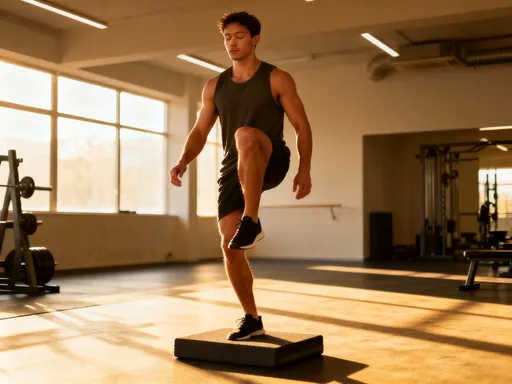
Neuromuscular re-education is the process of retraining the brain-body connection to restore proper movement patterns. It’s like rebooting a computer system that’s been running on glitchy software. Techniques used in this process are grounded in neuroscience and motor learning theory. Proprioceptive training, for instance, enhances the body’s awareness of joint position and movement, which is critical for balance and coordination. Simple exercises like standing on one leg with eyes closed challenge the nervous system to rely on internal feedback rather than visual cues, improving stability over time.
Slow-movement control is another powerful tool. Performing actions like a 10-second downward phase during a squat forces the brain to focus on muscle engagement and joint alignment. This mindful approach strengthens neural pathways and improves motor control. Band-resisted transitions—such as slowly stepping sideways against resistance—help retrain muscles to activate in the correct sequence. These drills are not about building bulk or endurance; they’re about precision and timing.
Walking, one of the most fundamental human movements, often needs retraining after injury. A mindful walking drill—focusing on heel strike, midfoot roll, and push-off—can re-establish natural gait patterns. Over time, these small corrections lead to more efficient, pain-free movement. The beauty of neuromuscular re-education is that it doesn’t require expensive equipment or complex routines. With consistency, the body relearns how to move safely and effectively, laying the foundation for long-term recovery.
Mobility vs. Stability: Finding the Balance for Lasting Recovery
One of the most common misconceptions in rehabilitation is that more flexibility equals better function. In reality, the body needs both mobility—the ability of a joint to move freely—and stability—the ability to control that movement. An imbalance between the two is a major contributor to recurring injuries. For example, someone with hypermobile shoulders may be able to lift their arms overhead with ease but lack the muscular control to stabilize the joint during pushing or lifting, increasing the risk of strain.
Biomechanical research shows that optimal movement relies on a joint-by-joint approach: some joints need more mobility (like the hips and thoracic spine), while others require greater stability (like the lumbar spine and shoulders). When a joint that should be stable becomes too mobile—or one that should be mobile becomes stiff—movement efficiency breaks down. This can lead to compensatory patterns, such as arching the lower back during a squat because the hips lack mobility, or shrugging the shoulders during overhead reaching due to poor scapular control.
A simple way to assess this balance is the bodyweight squat test. Observe your form in a mirror: do your knees cave inward? Does your lower back round? Do your heels lift off the ground? These are signs of either mobility restrictions or stability deficits. For instance, heels lifting may indicate tight calves or limited ankle dorsiflexion (a mobility issue), while knee collapse often points to weak glutes or poor hip control (a stability issue).
Corrective strategies involve targeted exercises to restore balance. For mobility, techniques like foam rolling, dynamic stretching, and joint mobilizations can improve range of motion. For stability, core bracing drills—such as drawing the navel toward the spine while maintaining steady breathing—help activate deep abdominal muscles. Joint prep routines, performed before activity, combine both elements: leg swings for hip mobility, followed by clamshells for glute activation. By addressing both sides of the equation, individuals build a more resilient, injury-resistant body.
When and How to Progress: Avoiding the Re-Injury Trap
One of the biggest challenges in recovery is knowing when to advance to the next level. Many people rush back into intense activity too soon, driven by impatience or a desire to ‘prove’ they’re healed. Unfortunately, this often leads to setbacks or re-injury. The key to sustainable progress lies in objective, evidence-based markers rather than subjective feelings of readiness. Research supports using specific criteria to guide advancement, ensuring that the body has truly adapted to each stage before increasing demand.
Three primary indicators signal that progression is appropriate: reduced pain response, improved range of motion, and enhanced muscular endurance. Pain should not be the only guide—some discomfort may be normal during rehabilitation—but sharp or increasing pain during or after exercise is a red flag. A better measure is how the body responds over the next 24 hours. If movement causes delayed soreness that lasts more than a day or worsens function, the intensity was likely too high.
Improved range of motion means the joint can move further with less stiffness, and with better control. For example, someone recovering from a shoulder injury should be able to reach overhead with a smooth, coordinated motion, not just force the arm upward. Endurance is equally important: can the muscle perform repeated contractions without fatigue? A person rebuilding knee strength should be able to do multiple bodyweight squats with proper form before adding resistance.
To avoid the re-injury trap, experts recommend the “24-Hour Rule”: wait a full day after a new or intensified exercise to assess how the body responds. If function improves or remains stable, progression is likely safe. If pain increases, swelling returns, or movement quality declines, it’s a sign to scale back. This rule helps prevent ego-driven comebacks and encourages patience. Progress isn’t linear, and setbacks are part of the process. By listening to the body’s feedback and advancing methodically, individuals build lasting strength without undoing their progress.
Integrating Recovery Work Into Daily Life—Sustainably
Recovery doesn’t end when formal rehabilitation does. True resilience comes from making movement a consistent part of daily life. The transition from structured therapy to long-term self-care is where many people struggle. The solution lies in habit stacking—linking new behaviors to existing routines—and environment design, which makes healthy choices easier. These strategies, supported by behavioral science, help turn short-term effort into lasting change.
For example, pairing a five-minute mobility routine with your morning coffee creates a natural cue. Stretching your hamstrings while waiting for the kettle to boil or doing shoulder rolls during a work break turns idle moments into opportunities for improvement. Workspace micro-movements—like seated spinal twists or ankle circles—counteract the stiffness of prolonged sitting and keep joints lubricated throughout the day.
In the evening, a short stability circuit—such as bird-dogs, side planks, and single-leg stands—can be done while watching TV. These exercises require no equipment and take less than 10 minutes, yet they reinforce neuromuscular control and build core strength over time. The key is consistency, not intensity. Small, daily efforts compound, leading to significant improvements in posture, balance, and injury resilience.
Environment design also plays a role. Placing a resistance band on your desk, keeping a foam roller by the bedroom door, or setting a daily phone reminder can reduce friction and increase adherence. Over time, these practices shift the mindset from ‘I have to do rehab’ to ‘this is how I take care of myself.’ Recovery becomes less about fixing a problem and more about honoring the body’s need for movement. And that shift—rooted in science, patience, and self-awareness—is what transforms healing into lasting strength.
True recovery isn’t just returning to where you were—it’s building a stronger, more aware version of yourself. By embracing science-guided movement, listening to your body, and progressing with patience, rehabilitation becomes a transformative journey. It’s not about shortcuts, but sustainable change. Always consult a qualified healthcare provider before starting any post-injury program—your unique path deserves personalized care.